
Semi-automatic filling
Useful for flexible production, shorter runs and packs that are difficult to feed automatically. The operator cycle is part of the output test and the pack must not touch or load the weighing assembly.
A practical guide to specifying common retail and food-service pack weights where product volume, refill stability, pack handling and the required automation level determine the best route.
Retail-pack weights are common for coffee, rice, pulses, pet food, snacks, dry ingredients, seeds, crystals, pellets and hardware, but products at the same target weight can occupy very different volumes. A light bulky product may need more hopper and discharge volume than a dense granule, while fragile pieces may limit drop height and feed intensity.
The shortlist should also reflect whether an operator presents each pack, whether a premade pouch system is required, or whether the line forms bags from roll film. The required accepted output is the complete finished-pack rate, including product refill, weighing, pack presentation, sealing, coding, inspection and removal.
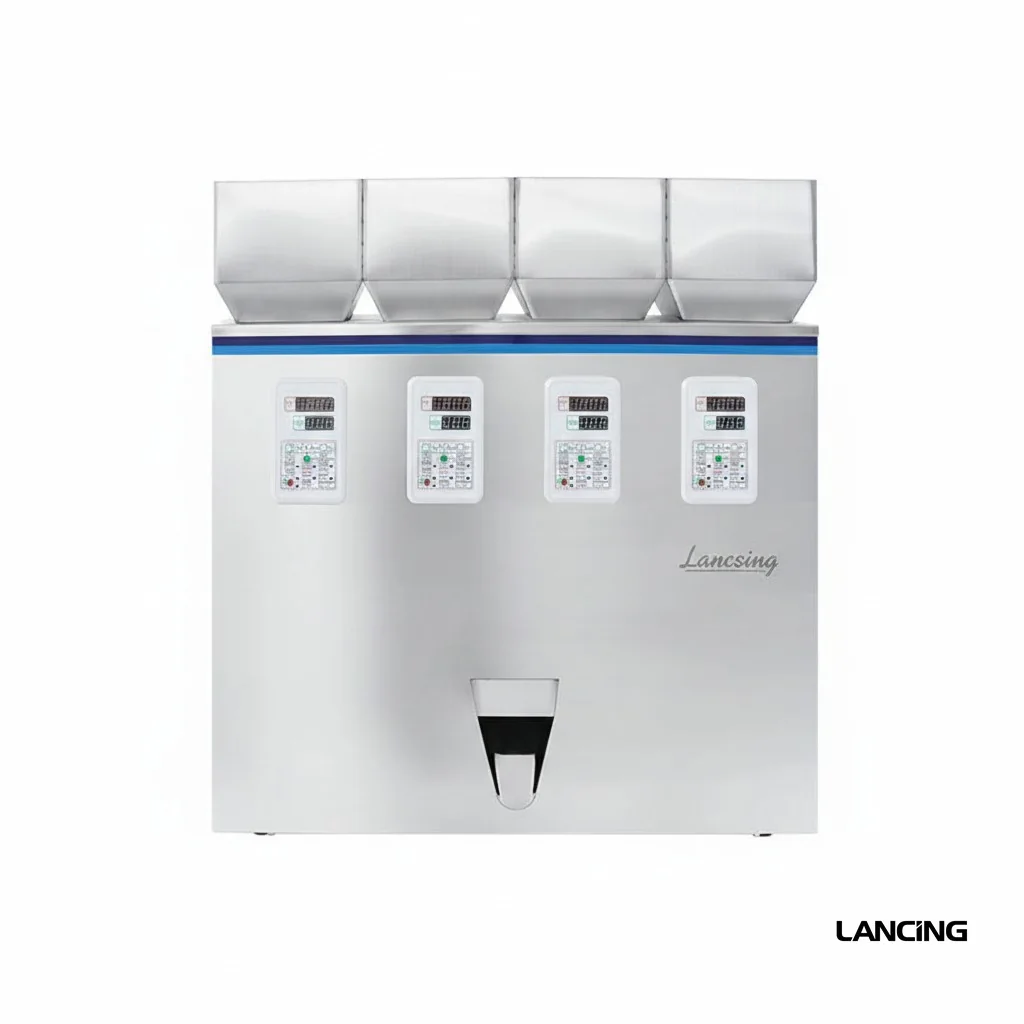
Use product and pack evidence to choose the route before comparing individual machine configurations.
Useful for flexible production, shorter runs and packs that are difficult to feed automatically. The operator cycle is part of the output test and the pack must not touch or load the weighing assembly.
A practical route for free-flowing granules, seeds, coffee, rice, pellets and regular pieces. Hopper refill and product depth should remain controlled so that coarse and fine feed settings stay repeatable.
Often considered for irregular pieces, fragile foods or higher output. Several partial weights create combinations close to target, but the product distribution system and downstream packer must support the required cycle.
Suitable where weighing, bag forming, filling and sealing should operate as one automatic line. Production film, bag length, sealing dwell, coding, product drop and outfeed can all set the stable rate.
Test the factors that can change a stable laboratory result into an unstable production cycle.
The required weight must fit the weighing and discharge path. Test the most voluminous target and include normal variation in density or aeration.
Hopper level can change feeder behaviour. A useful trial includes refill and low-level operation instead of running only from a freshly loaded hopper.
Flexible pouches, paper bags, jars and tubs need different support. The pack opening must receive the full dose without touching the weigh system or contaminating a later seal.
Several products or pack sizes can justify recipe control, accessible contact parts, documented reassembly and first-off verification after changeover.
The usable result must be confirmed with representative product and packs. The figures below are reference conditions already documented on the corresponding model pages.
| Route | How to use the reference |
|---|---|
| LU-3000C semi-automatic route | Reference range 20–3000 g and published output reference approximately 6–15 fills/minute, dependent on product, target, pack presentation and operator handling. Open the supporting page |
| LU-999 compact route | Reference range 10–999 g for suitable free-flowing dry products, subject to available volume and a trial. It can be considered for the lower part of this pack band. Open the supporting page |
| LU-GFKL420 multihead VFFS route | Ten-head reference configuration covering 10–2500 g, with the cited application at 500 g to 1 kg. Product distribution, film and sealing determine the line result. Open the supporting page |
A useful trial covers the smallest, routine and largest targets with normal hopper refill. Run the real bag, pouch, jar or tub and include the normal operator or automatic handling cycle. Record accepted packs, rejects, spills, retained product, seal contamination and any manual intervention.
For weight evidence, use a controlled tare and a suitable reference scale. Report consecutive net weights, mean, sample standard deviation, minimum, maximum, range and any result outside the acceptance band. Separately record the sustained accepted output over a defined period.