
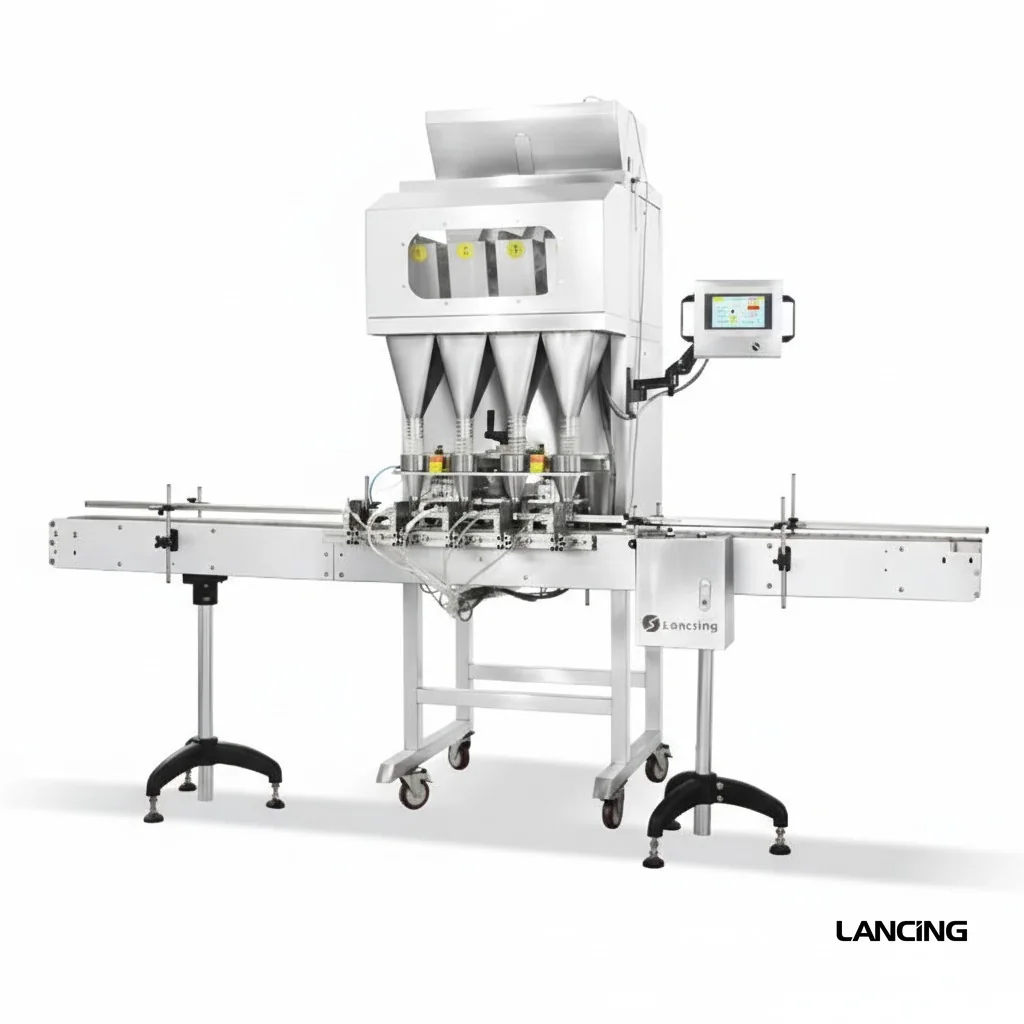
Machine route
Linear weigh fillers
For free-flowing granules, beans, seeds, snacks and small components.
View route →Industrial dry products need practical specification around product behaviour, cleanliness, weight range, pack handling and operator safety.
Start with your product and finished pack. Lancing compares product behaviour, target weight, pack handling and output so the machine shortlist is practical from the start.
A good recommendation balances product behaviour, target fill weight, pack handling, closure or seal method, throughput and how much operator involvement is acceptable.
Use these options to narrow down the right machine for your product, pack and production target.
For free-flowing granules, beans, seeds, snacks and small components.
View route →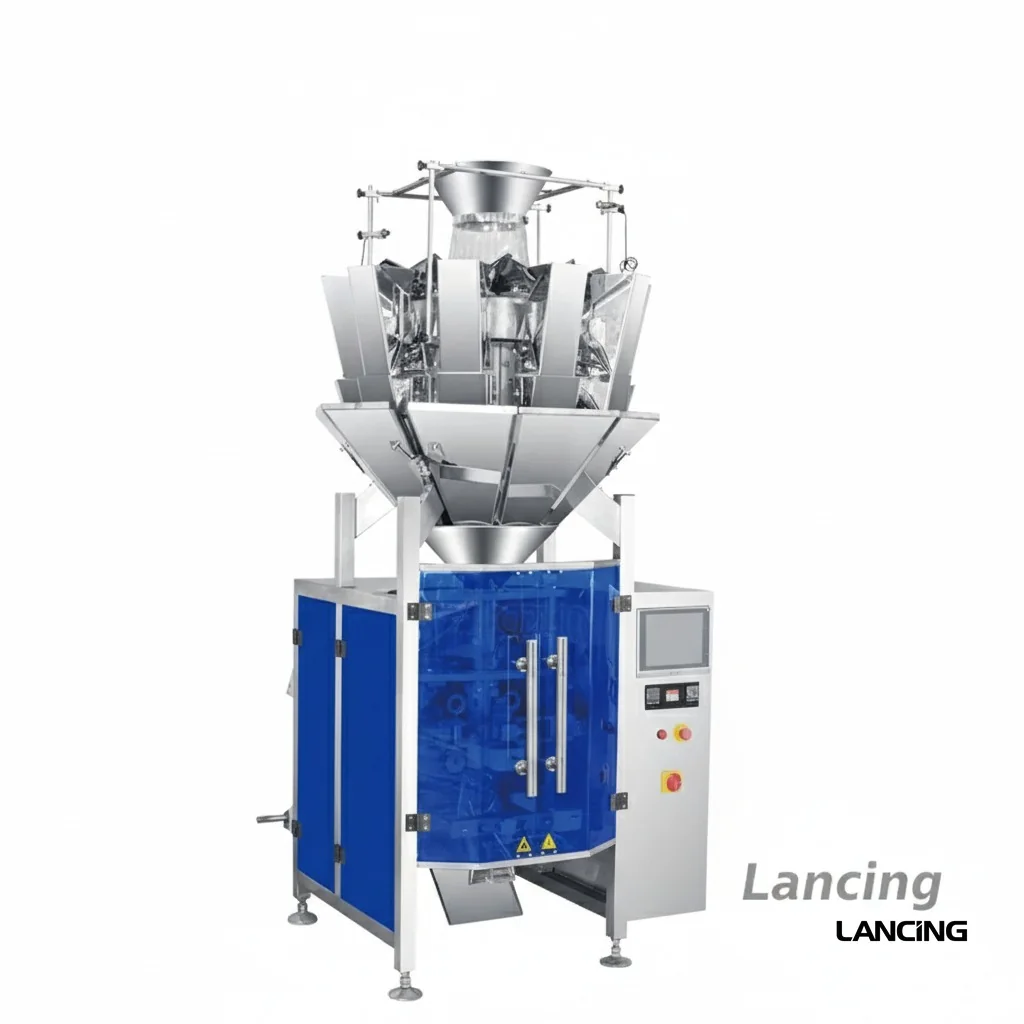
For higher-throughput portioning where speed, accuracy and pack presentation matter.
View route →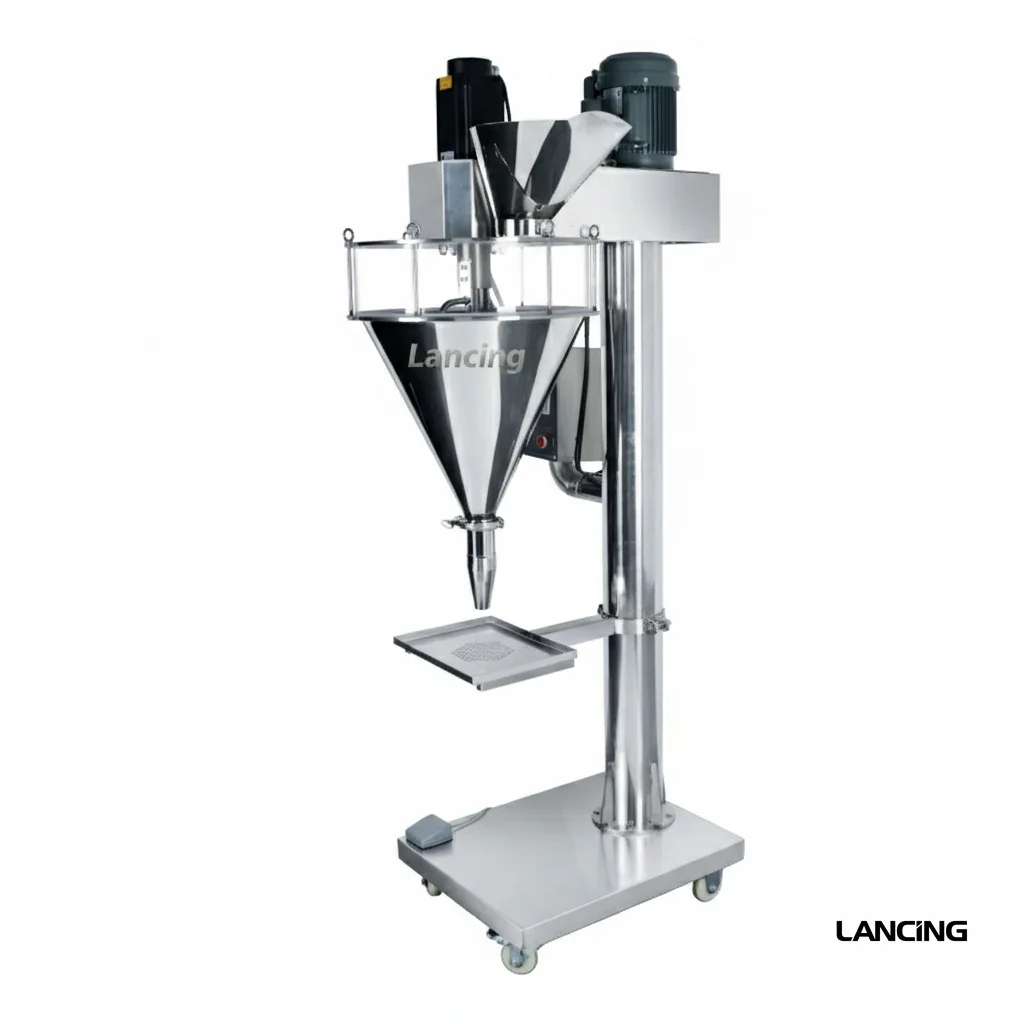
For powders, dry blends and products that need controlled screw dosing.
View route →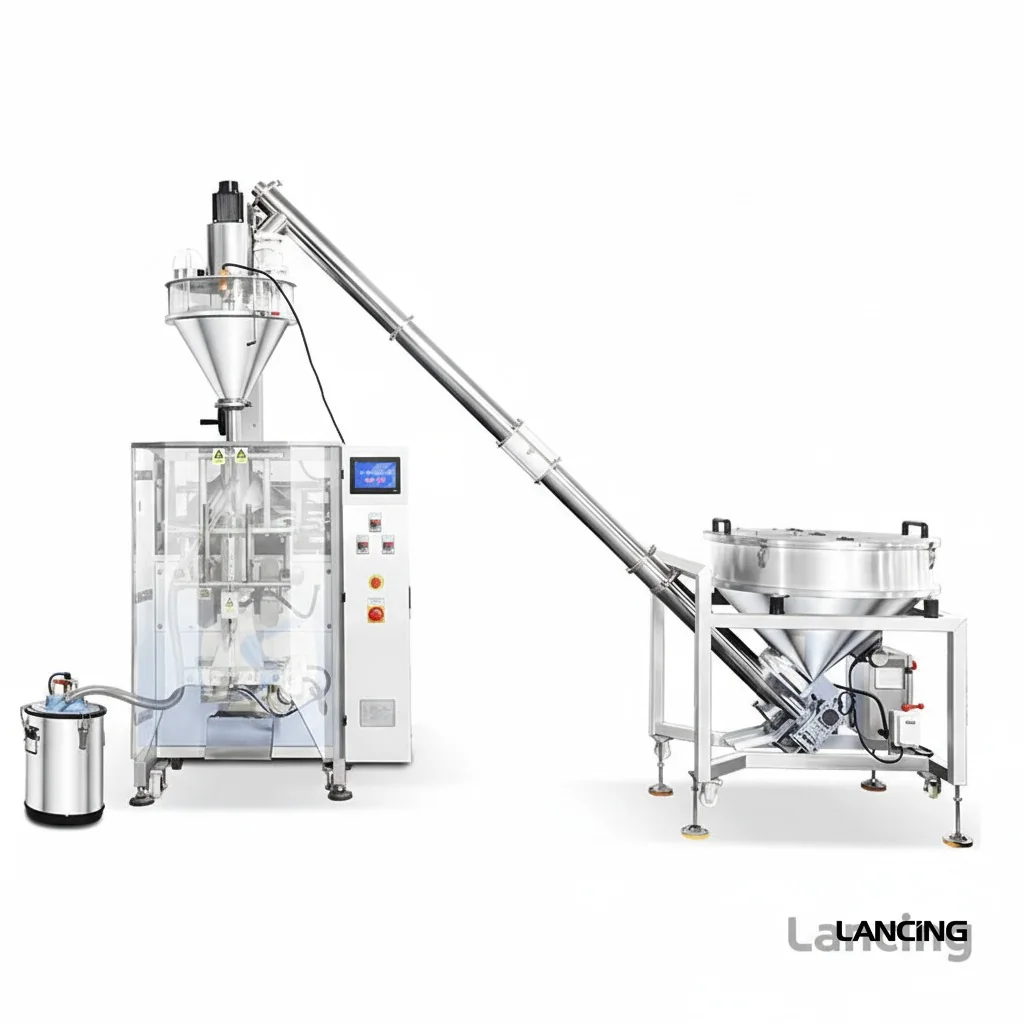
For roll-film bagging lines that form, fill and seal in one connected process.
View route →| Factor | Why it matters | Useful enquiry detail |
|---|---|---|
| Product behaviour | Determines whether weighing, auger dosing or hybrid feeding is suitable. | Flowability, dust, particle size, fragility, density and product sample availability. |
| Target fill | Changes hopper size, dosing principle, accuracy expectation and output. | Minimum and maximum fill weights plus acceptable tolerance. |
| Pack format | Controls discharge height, filling mouth, closure, sealing and downstream equipment. | Pouch, bag, jar, tub, bottle, box or existing machine interface. |
| Automation level | Defines operator workflow, speed, footprint and integration requirements. | Semi-automatic, compact automatic, full line or staged upgrade route. |
Straight answers to help you choose the right filling route before requesting advice.
Yes. Small parts and components can often be dosed by weight, but shape, size, nesting behaviour and pack format need review.
They can be. Dust, containment, material compatibility, cleaning and site requirements may all affect the correct filler route.
Send the product description, particle size, bulk density where known, target weight, pack type, output and any material or containment constraints.
Use these pages to compare product and pack-specific filling options.
That gives Lancing enough information to compare a linear weigher, multihead weigher, auger filler or integrated bagging line.
Hardware, pellets, additives and dry industrial products may be free-flowing, abrasive, dusty, static-prone or damaging to a standard contact path. A weight range alone does not establish suitability.
No standard page should be treated as an ATEX, chemical-compatibility or safety approval. Those duties require a separate technical and risk assessment against the supplied product information and site conditions.
Industrial products often introduce issues such as abrasion, dust, component damage, counting expectations and site-specific risk controls.
Abrasive products can influence hopper, feeder and discharge-wear planning. The enquiry should identify the product, particle shape, expected running hours, cleaning method and whether product-contact parts are likely to need inspection or replacement.
Plan spares and wear partsWeighing can be suitable when component weight is consistent enough for the required pack count, but counting may be more appropriate when exact piece quantity is critical and component variation is high.
Compare weighing and countingDusty or hazardous products should be reviewed with the buyer’s SDS and site-specific assessment. Machine selection should not be separated from containment, extraction and cleaning requirements.
Review dust-risk planningFor fixings, caps, fittings and similar dry parts, the trial should check individual piece-weight variation, discharge behaviour and the pack-check method.