
Flow and handling
Particle size, dust, fragility, stickiness, static, density variation and whether the product bridges or surges.
A connected route for projects where the machine must form the bag from roll film, dose the product by weight or auger, then seal and discharge the finished pack.
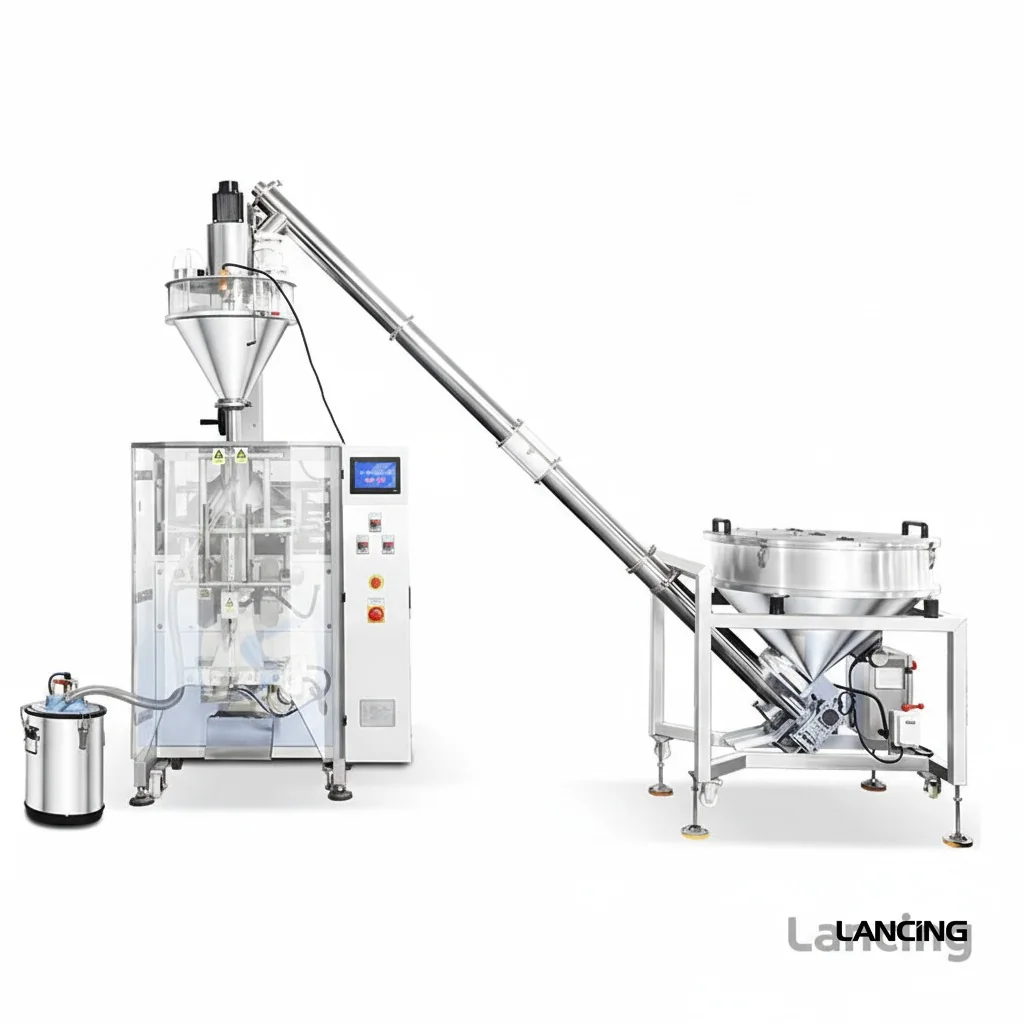
VFFS routes are relevant when the line must form a bag from roll film, dose product and seal the finished pack. The practical shortlist depends on film, bag size, dosing method, coding, checkweighing and discharge handling.
Start with the real product, not a catalogue category. Flow behaviour, target weight, acceptable tolerance, pack presentation and operator workflow determine whether this machine route is practical.
Use this route to compare a VFFS weigh filling line against your product, target weight, pack format, output target and line constraints. The links below also help you compare related machine and application options before asking for advice.
These are the details that normally change the recommendation, model, controls, integration points and final line layout.
Particle size, dust, fragility, stickiness, static, density variation and whether the product bridges or surges.
Pouch, bag, jar, tub, bottle, sachet or downstream feed, plus the sealing or closing method after filling.
Target packs per minute, tolerance, operator involvement, cleaning frequency and future SKU changeovers.
Useful quick answers before you send your product and pack details.
Choose VFFS when you need the packaging machine to form bags from roll film, fill them and seal them in one integrated process.
Yes. The dosing unit is selected around product behaviour, so a VFFS line may use a multihead weigher, linear weigher, auger filler or other feeder.
Bag size, film material, seal type, product flow, target weight, coding, checkweighing, speed and available floor space all affect the line specification.
That gives Lancing enough information to compare a linear weigher, multihead weigher, auger filler or integrated bagging line.
The following values come from a first-party Lancing reference specification. They should be used as a configuration example and confirmed against product samples, production film and the agreed acceptance test.
| Item | Verified reference | Acceptance condition |
|---|---|---|
| System | Automatic VFFS bagger with ten-head electronic weighing. | Product feed, weigher, former, film path, sealing and discharge must be run together. |
| Model | Lancing LU-GFKL420. | Final machine and options must match the quotation and approved layout. |
| Weighing range | 10–2500 g; quoted application 500 g to 1 kg. | Verify the smallest, normal and largest target with representative product. |
| Head count and hopper | Ten electronic scales; approximately 1.3 L per head. | Check piece size, bulk density, head utilisation and refill distribution. |
| Speed | 5–60 bags/minute. | Subject to product, bag size, film, sealing cycle and downstream handling. |
| Accuracy | Approximately ≤0.3–1 g. | Subject to product and target weight; confirm mean, standard deviation, minimum and maximum in a witnessed trial. |
| Bag and film basis | Approx. W100–200 mm × L230 mm standard; max. film width 420 mm; compatible heat-sealable films listed in the reference specification. | Final former, film, seal style, registration, jaw settings and finished bag must be approved. |
For detailed film-forming and sealing ownership, use Form Fill & Seal.
It is a fully automatic VFFS reference with ten electronic weighing heads, a 10–2500 g range, approximately 1.3 L per head and roll-film bag forming, filling and sealing. Final performance remains trial-dependent.
Film draw, bag length, sealing dwell, coding, product drop, discharge and downstream handling can limit the overall cycle even when the weighing head is ready.
Run the intended product and film at the planned target, inspect consecutive seals, record contamination or trapped pieces and adjust discharge timing, drop path and bagger cycle.
Normally after the finished bag is sealed and stabilised, with sufficient spacing and a validated reject route. The exact position depends on the line and legal or QA control plan.
Provide finished bag width and length, film width and structure, seal style, registration details, product bulk density, target weight and representative film where possible.
The model page brings the ten-head weigher, reference weight range, hopper volume, film width, bag format, controls handshake and finished-pack test into one application-specific route.
Verified reference figures with the product, film and bag conditions that must be confirmed by trial.
Review the model configurationPlan the sequence that prevents a measured dose being released without a valid bag.
Use the controls interface guideTest consecutive net weights, pack quality, coding, refill, reject handling and normal line interruptions.
Plan the VFFS FAT