
Maintain distribution without overloading heads.
The elevator and distribution system should keep enough product available while preventing compaction, breakage, blockage or an unstable head load.
An automatic vertical form-fill-seal reference configuration combining ten electronic weighing heads with roll-film bag forming, filling and sealing for suitable dry products.
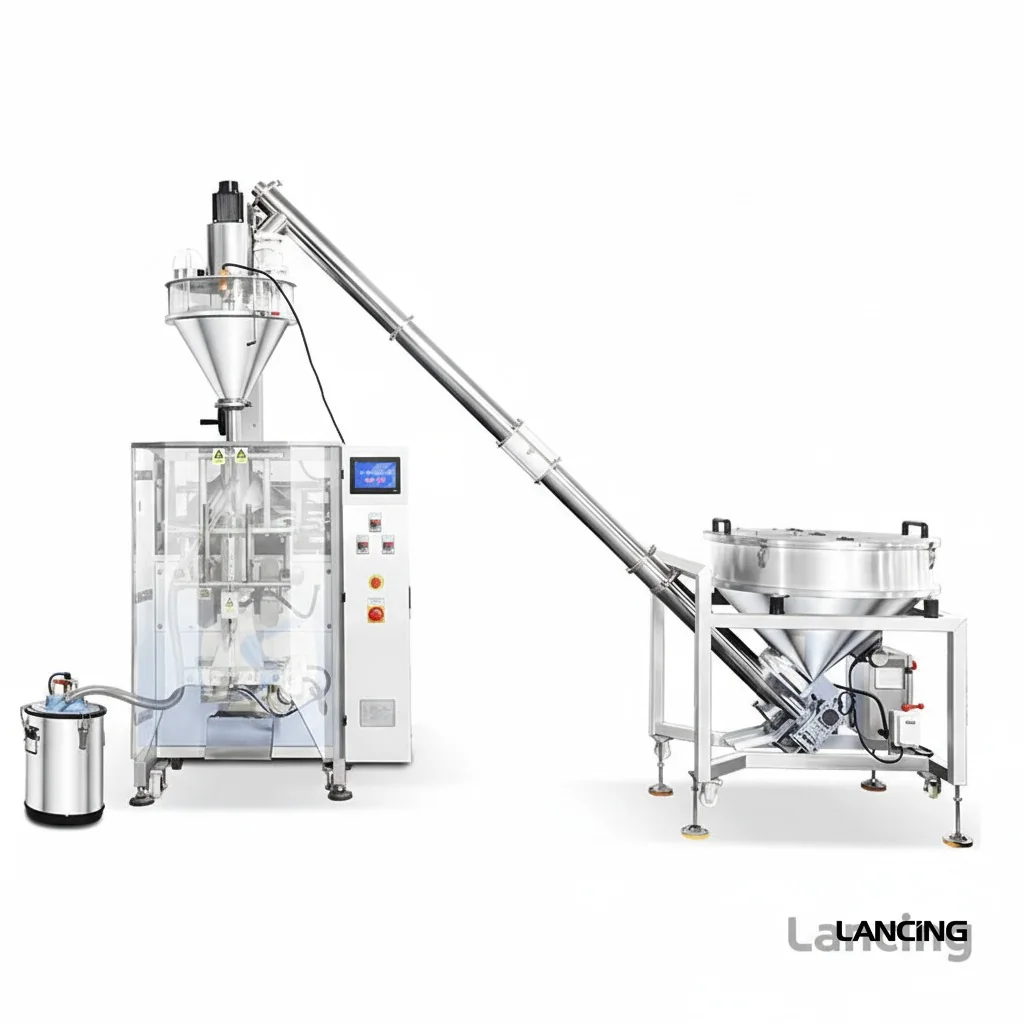
The LU-GFKL420 reference combines product distribution, ten electronic weighing heads, a timed discharge, a vertical bag maker and heat sealing. Performance therefore depends on more than the weigher: the product elevator, film, former, sealing dwell, drop distance, coding, outfeed and controls handshake all contribute.
The cited 500 g to 1 kg application sits inside the broader reference weight range, but the usable result for any new product must be demonstrated with representative product, production film and the intended finished bag.
| Reference weighing range | 10–2500 g; the cited application was 500 g to 1 kg. |
|---|---|
| Weigher configuration | Ten electronic weighing heads. |
| Reference hopper volume | Approximately 1.3 litres per weighing head. |
| Published output reference | 5–60 bags/minute, dependent on target weight, product behaviour, bag length, film and sealing conditions. |
| Published accuracy reference | Approximately ≤0.3–1 g under referenced conditions; a new product requires a representative trial and agreed test method. |
| Reference bag format | Approximately W100–200 × L230 mm for the cited configuration. |
| Reference maximum film width | 420 mm. |
| Film boundary | Compatible heat-sealable roll films that run correctly through the former and sealing system, subject to sample approval. |
The fastest component does not define the accepted line output. The process is limited by the slowest stable stage and by the controls required to prevent product discharge without a correctly formed bag.
The elevator and distribution system should keep enough product available while preventing compaction, breakage, blockage or an unstable head load.
The controller evaluates available hopper weights and releases an appropriate combination. Product size and head fill consistency affect how many combinations are available.
The bag maker must signal readiness before release. The dose travels through the timing hopper and forming tube before the transverse seal closes the pack.
Film width alone does not prove compatibility. The web must track on the machine, form cleanly around the selected collar and achieve an acceptable seal through the intended product, temperature and production environment.
A safe interface should distinguish ready, weigh request, discharge permission, busy, cycle complete, low product, film fault, seal fault, downstream unavailable and emergency-stop conditions. The final signal list belongs in the project controls specification.
First verify the weigher using consecutive fills and an agreed reference scale. Then run the combined system with the production film, normal bag length, coding and outfeed. Record accepted bags, rejects, film stops, seal contamination, product spill, operator intervention and hopper replenishment.
Accuracy should be assessed on net finished-pack weights using a documented tare method. Report the mean, sample standard deviation, minimum, maximum and any pack outside the acceptance band. Where a checkweigher is included, verify pack tracking and reject confirmation separately from the filler control.
Output should be stated as sustained accepted finished bags per minute over a defined test period. A short peak speed without normal film changes, refill and fault handling is not the same as production capacity.
Lancing can review the complete product-feed, weighing, forming, sealing, coding and outfeed sequence before a final automatic line is specified.
No. The reference range is conditional. Target weight, product flow, number of usable combinations, bag length, film tracking, seal dwell, coding and outfeed can all limit the stable rate.
No. It applies only to referenced conditions. The new application must be tested with representative product, a documented tare method and consecutive finished packs.
The film must be compatible with the forming collar, web handling and sealing process. Production-quality roll samples and seal trials are required before approval.
It prevents product release when no valid bag is ready and allows the line to stop in a controlled way when film, sealing, product feed or downstream equipment is unavailable.
Potentially, but feedback must be bounded, delayed to the correct pack and validated so that it corrects a genuine mean shift rather than reacting to isolated variation.