
Flow and handling
Particle size, dust, fragility, stickiness, static, density variation and whether the product bridges or surges.
Use this route when a single feed channel is not enough and the line needs fast, repeatable combination weighing for irregular or mixed products.
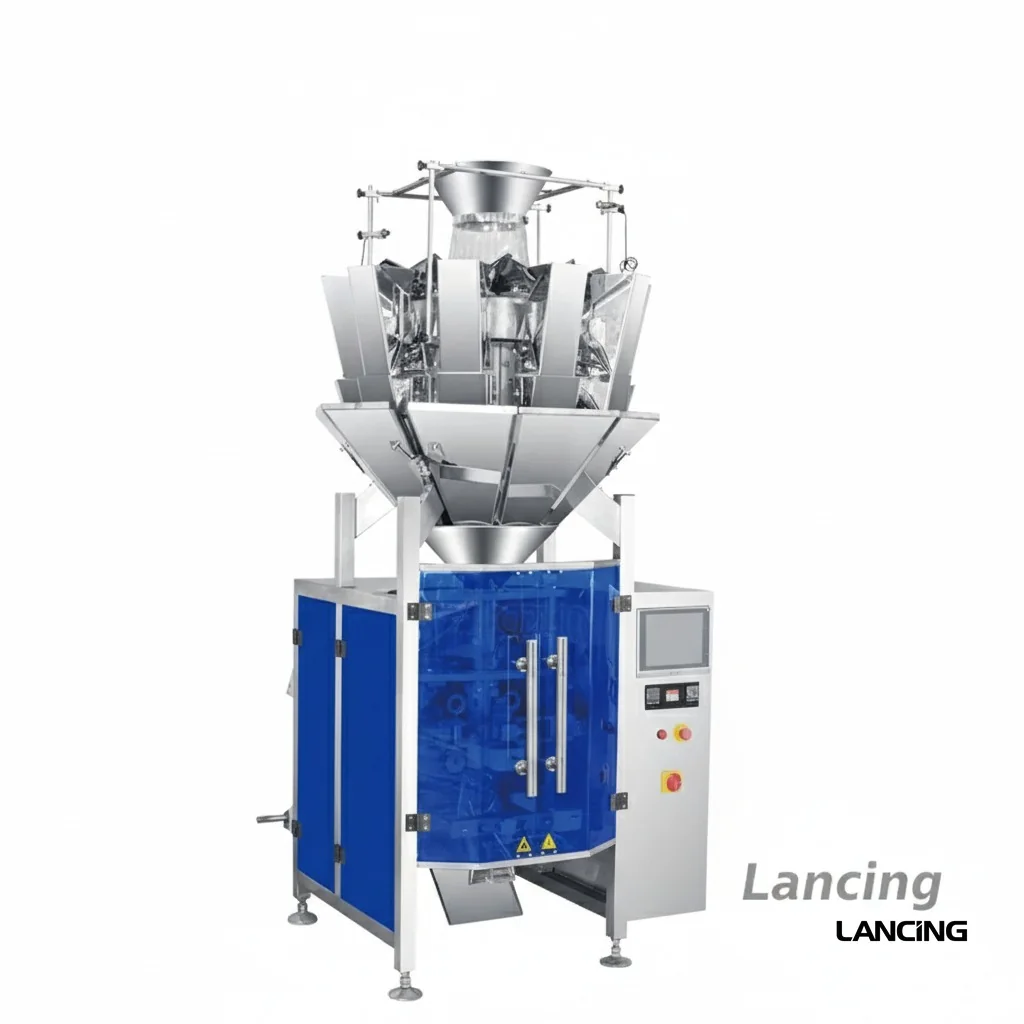
Multihead routes suit higher-output dry-product applications where speed, accuracy and pack presentation all matter. The shortlist should consider head count, bucket design, product fragility and the discharge into the bagger or container.
Start with the real product, not a catalogue category. Flow behaviour, target weight, acceptable tolerance, pack presentation and operator workflow determine whether this machine route is practical.
Use this route to compare a multihead combination weigher against your product, target weight, pack format, output target and line constraints. The links below also help you compare related machine and application options before asking for advice.
These are the details that normally change the recommendation, model, controls, integration points and final line layout.
Particle size, dust, fragility, stickiness, static, density variation and whether the product bridges or surges.
Pouch, bag, jar, tub, bottle, sachet or downstream feed, plus the sealing or closing method after filling.
Target packs per minute, tolerance, operator involvement, cleaning frequency and future SKU changeovers.
Useful quick answers before you send your product and pack details.
Compare a multihead weigher when output, target-weight consistency or irregular product shape makes a simple linear route limiting.
They can be configured for many fragile products, but bucket design, drop height, speed and product handling must be reviewed.
No. They can be integrated with VFFS lines, premade pouch systems, containers or other downstream equipment depending on the layout.
That gives Lancing enough information to compare a linear weigher, multihead weigher, auger filler or integrated bagging line.
Product is distributed across several feed paths and weigh hoppers. The controller compares available partial weights and selects a combination close to the target, then discharges the selected hoppers together. The next result depends on how quickly and evenly the emptied hoppers refill.
Useful performance therefore depends on more than the nominal number of heads. Product distribution, bucket volume, target weight, piece size, allowable drop, feeder settings and the cycle of the receiving pouch, bag or container system all need to be tested together.
The Lancing LU-GFKL420 first-party reference uses ten electronic weighing heads with approximately 1.3 L per head, a 10–2500 g range and a 5–60 bags/minute reference. Its approximately ≤0.3–1 g accuracy reference is conditional on product and target weight, while output is also conditional on bag size and film. Those figures belong to that specified configuration and trial basis, not every multihead application.
Record removal and replacement of feed pans, pool hoppers, weigh hoppers, chutes and collection funnels where applicable. Check whether tools are required, whether parts can be positively identified to a recipe, and how the machine is verified after reassembly.
For food, allergen or flavour changeovers, define the cleaning standard and inspection method before the machine is selected. “Stainless steel” alone does not prove hygienic suitability for a specific process.
No. Product distribution, bucket volume, target weight, combination logic, drop height and the receiving machine can matter more than head count alone.
Report consecutive finished-pack net weights, mean, standard deviation, minimum, maximum, under-target count, rejects and output under the same product and bagger conditions.
Compare representative incoming and finished samples for breakage, fines and visual damage, and record the effect of feeder amplitude, bucket design and drop height.
Long product tails, bouncing pieces, poor discharge timing, excessive drop height or unstable bagger synchronisation can allow product into the jaw area.
Potentially, but the timed discharge, distribution device, container indexing and product drop must be designed and tested for that pack route.
The LU-GFKL420 reference page shows how a ten-head weigher, timing hopper, roll film, former and sealing system interact. The combination result must still be proved with the intended product, bag and complete controls sequence.
A multihead weigher should be judged by the combinations and product handling it can sustain on the intended line.
A multihead weigher holds several separate hopper weights and selects a combination that approaches the target. A linear weigher normally builds the dose through one or a smaller number of sequential feed paths.
Read the direct comparisonLarge pieces and low target weights can leave few usable combinations, while a well-distributed product with several pieces per dose may create more options. Hopper capacity and radial distribution must suit the real size range.
Assess irregular productsRecord the consecutive distribution, unavailable combinations, product damage, hopper occupancy, refill behaviour, discharge timing, rejected packs and accepted finished-pack output. Average weight alone can hide poor repeatability or product handling.
Compare trial results