
Bulk feed approaches the target.
Vibration moves product towards the weighing chamber. Product depth, hopper level and feeder amplitude affect how quickly and consistently the dose builds.
A compact floor-standing weight filling machine for operator-presented bags, pouches, jars, pots and suitable containers, with every output and tolerance figure subject to the intended product and handling method.
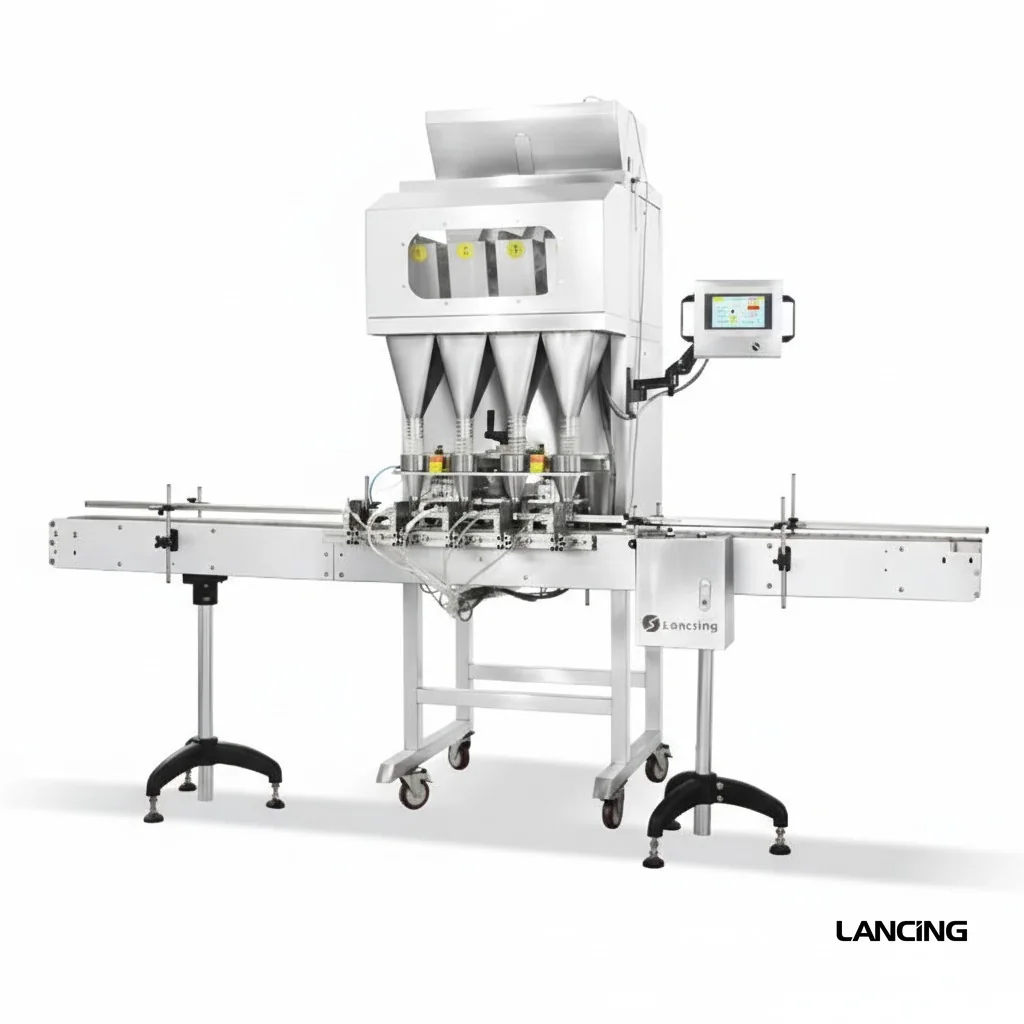
The LU-999 reference uses an upper product hopper, controlled vibration and an electronic weighing system. Product accumulates until the target is reached, then the measured dose is discharged into a suitable pack presented below the outlet.
The model is a practical starting point for smaller dry-product packs and flexible production, but it is not a universal powder filler. Product flow, particle size, dust, static, bulk density, pack-mouth clearance and operator cycle all influence the final result.
| Reference weighing range | 10–999 g. |
|---|---|
| Published output reference | 6–15 bags/minute, dependent on product, target weight and pack handling. |
| Published accuracy reference | Approximately ±2 g, dependent on material and confirmed only by a representative product trial. |
| Reference hopper | Approximately 280 × 280 × 270 mm. |
| Reference power | Approximately 260 W; the final UK electrical supply and machine build must match the quotation. |
| Product boundary | Free-flowing granular, powdered and small-piece dry products, subject to samples and trials; not a liquid or paste filler. |
Testing each stage separately makes it easier to identify whether variation comes from the feeder, the weighing path, the discharge or the operator-presented pack.
Vibration moves product towards the weighing chamber. Product depth, hopper level and feeder amplitude affect how quickly and consistently the dose builds.
The machine reduces the flow as the target approaches. Material already travelling after the feeder slows or stops must be allowed for during tuning.
The outlet, pack mouth, support height and operator timing must prevent retained product, bounce, spill or contact with the weighing system.
A target within the 10–999 g reference range can still be unsuitable if the product is too bulky for the weighing chamber or the required pack opening does not clear the discharge. Low-density products, irregular pieces, static-prone materials and very fine powders need particular attention.
A multihead weigher may be more appropriate when irregular pieces and higher output justify combination weighing. An auger route may control cohesive or poorly flowing powder more effectively. A larger single- or dual-head vibratory system may suit heavier target weights or a larger dose volume.
Lancing can review the target range, pack interface, required output and trial evidence before the final configuration is quoted.
No. It is a reference dependent on the material and operating conditions. A useful acceptance result needs consecutive fills using the intended product, target, pack and operator cycle.
Some free-flowing dry powders may be candidates, but cohesive, aerated, dusty or bridging powder may need an auger or another controlled-feed route. Product trials decide suitability.
No. The product volume must fit the weighing and discharge path. Low-density or bulky products can exceed the available volume before the target weight is reached.
State whether the figure is machine discharges or accepted finished packs. The sustained figure should include normal pack presentation, product refill and removal of completed packs.
Potentially, but each materially different product needs its own flow assessment, settings, cleaning method and first-off verification.