5 kg to 30 kg planning range

Bulk-bag weigh filling for 5 kg to 30 kg packs.

A specification guide for heavier open-mouth bags and operator-presented packs where product flow, weigh-hopper volume, bag support, dust control and safe handling shape the complete line.

Large target weights require a complete bag-handling and product-feed assessment.

A target of 5 kg to 30 kg does not identify one universal machine. Dense free-flowing granules, low-density animal feed, dusty powders, abrasive minerals and irregular components need different hopper volumes, feed controls, contact materials, dust measures and discharge arrangements.

The specification should cover the full path from bulk product supply to the closed or transferred bag. For operator-presented open-mouth bags, the bag clamp, support height, release sequence and take-off method are part of the production cycle. For automatic lines, bag presentation, filling permission, discharge, closing and downstream availability require a defined controls interface.

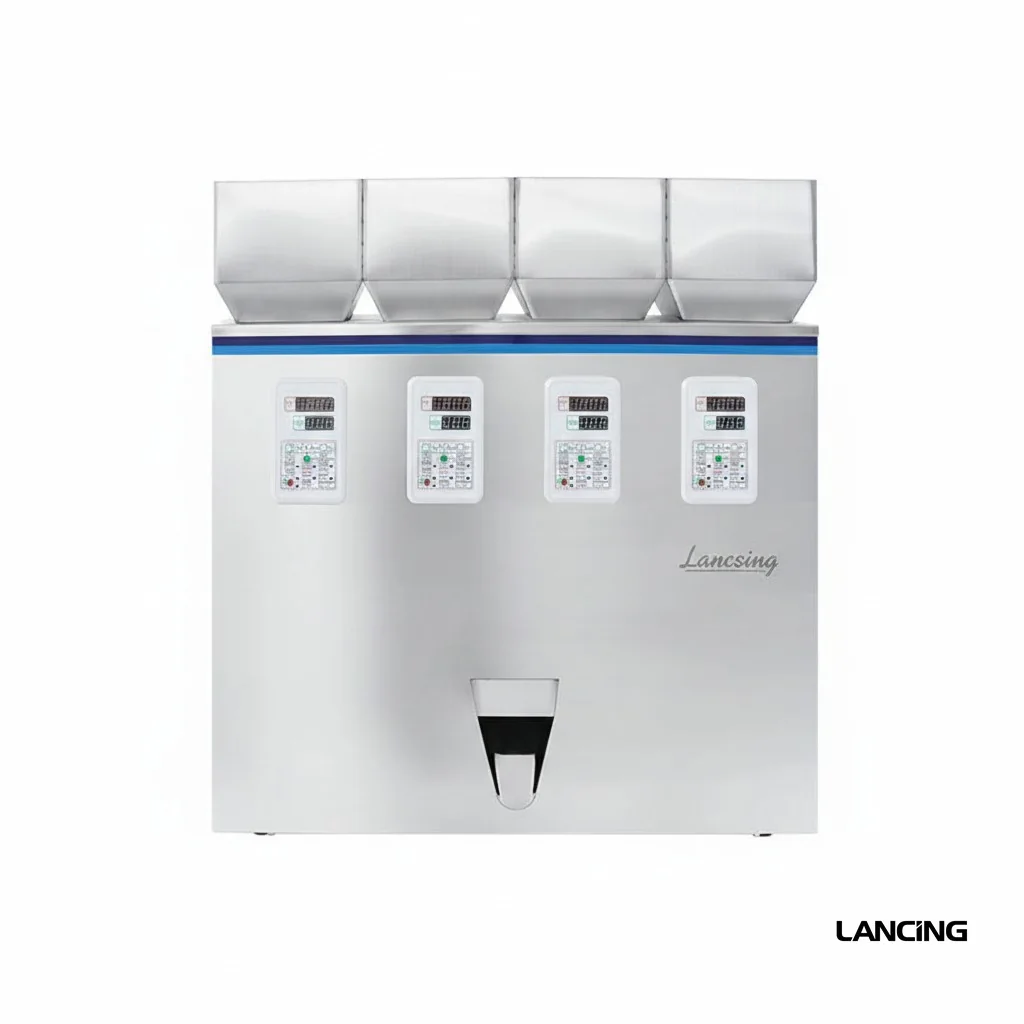
Stainless steel multi-hopper weigh filler used as a reference for larger dry-product bags

Specification checks

  • State the product bulk density, flow behaviour, dust level, abrasion and normal batch variation.
  • Provide empty and filled bag dimensions, mouth construction and closure method.
  • Define whether the stated output is filled bags or accepted closed bags.
  • Include operator lifting, support, take-off and access in the layout review.
Machine route

What weighing arrangement is used for heavier bags?

Use product and pack evidence to choose the route before comparing individual machine configurations.

Net-weigh hopper route

Product is accumulated in a separate weigh hopper and released into the bag after the target is reached. The bag does not normally form part of the weighing system, which can support a fast repeatable discharge when the product and hopper volume are suitable.

Gross-weigh or bag-on-scale route

The bag and support are weighed while product is added. This can simplify the transfer path but the bag clamp, support and movement around the scale must not create unstable forces or tare errors.

Dual-head or staged feed

Separate or alternating feed paths can improve the overall cycle for suitable products, but the combined discharge, bag presentation, refill and downstream closing stages remain possible bottlenecks.

Auger or controlled screw feed

Often considered for powders that need positive controlled feed rather than vibration. Product aeration, compaction, dust and cleaning requirements must be tested on the actual material.

Selection factors

What normally sets the bulk-bag line result?

Test the factors that can change a stable laboratory result into an unstable production cycle.

Hopper volume and refill

The largest product volume must fit with working allowance. Refill should not shock-load the weigh system or change product density enough to destabilise the feed profile.

Bag clamp and support

The bag must be held securely and released predictably. Clamp contact, operator pull and take-off movement should not affect the weighing signal or create a spill risk.

Dust and product containment

Dusty material may require a close-fitting spout, extraction connection and a cleaning method that prevents retained product from affecting later fills.

Closing and transfer

Heat sealing, stitching, folding, coding and conveyor transfer can set the accepted throughput. The line should stop in a controlled way if downstream equipment is unavailable.

Verified references

Reference evidence and selection boundaries.

Only one current verified Lancing model page extends into the lower part of this band. Higher targets require a project-specific hopper, feeder, bag and site assessment rather than an assumed model claim.

RouteHow to use the reference
LU-DL5000D dual-head referenceReference weighing range 100–10,000 g, published output approximately 20–30 bags/minute and supplier accuracy reference approximately 2–6 g, all dependent on product and operating conditions. Two reference hoppers are approximately 25 litres each. Open the supporting page
Weigh-hopper systemsUse the weigh-hopper guide to compare isolation, zero stability, product retention, load-cell contact and controlled discharge before selecting a heavier bagging route. Open the supporting page
Bag-clamping systemsReview bag mouth, clamp, support, operator access and discharge clearance as part of the line rather than treating the filler as a stand-alone component. Open the supporting page
Acceptance evidence

Define acceptance around finished bags and a controlled tare method.

Record consecutive finished bags using representative product, the normal refill method and the intended closing or take-off sequence. Note zero checks, tare, net weight, refill events, spill, dust escape, incomplete discharge, manual intervention and rejected bags.

Report mean, sample standard deviation, minimum, maximum, range and results outside the agreed acceptance band. Where packaged-goods or legal-metrology obligations apply, the responsible packer should confirm the applicable controls and verification arrangements for the actual product and pack. General machine trials do not replace that site-specific assessment.

Information needed for a useful quotation.

  • Representative product sample and safety data where relevant.
  • Bulk density, particle size, dust, abrasion and flow observations.
  • Target range and maximum product volume per bag.
  • Bag material, dimensions, mouth construction and closure method.
  • Required accepted bags per hour and shift pattern.
  • Product infeed method, bulk supply and refill height.
  • Bag support, take-off conveyor, sealer or stitcher requirements.
  • Dust extraction, cleaning, access and site-layout constraints.