
Linear weigh fillers
Good for moderate outputs, multiple products and controlled dry product dosing.
View routePlan weighing hoppers, feeders and discharge systems for dry-product filling and bagging machinery.
A weigh hopper system must collect, stabilise and discharge the dose without creating a bottleneck. Hopper geometry, load cell arrangement, product feed and discharge gate all affect performance.
The hopper should be sized for the largest dose but still controlled enough for smaller fills. For dusty, fragile or poor-flowing products, feeding and discharge details often matter more than basic capacity.
A good line design reviews how the hopper is fed, how the pack is presented and how cleaning or access will be handled after production.
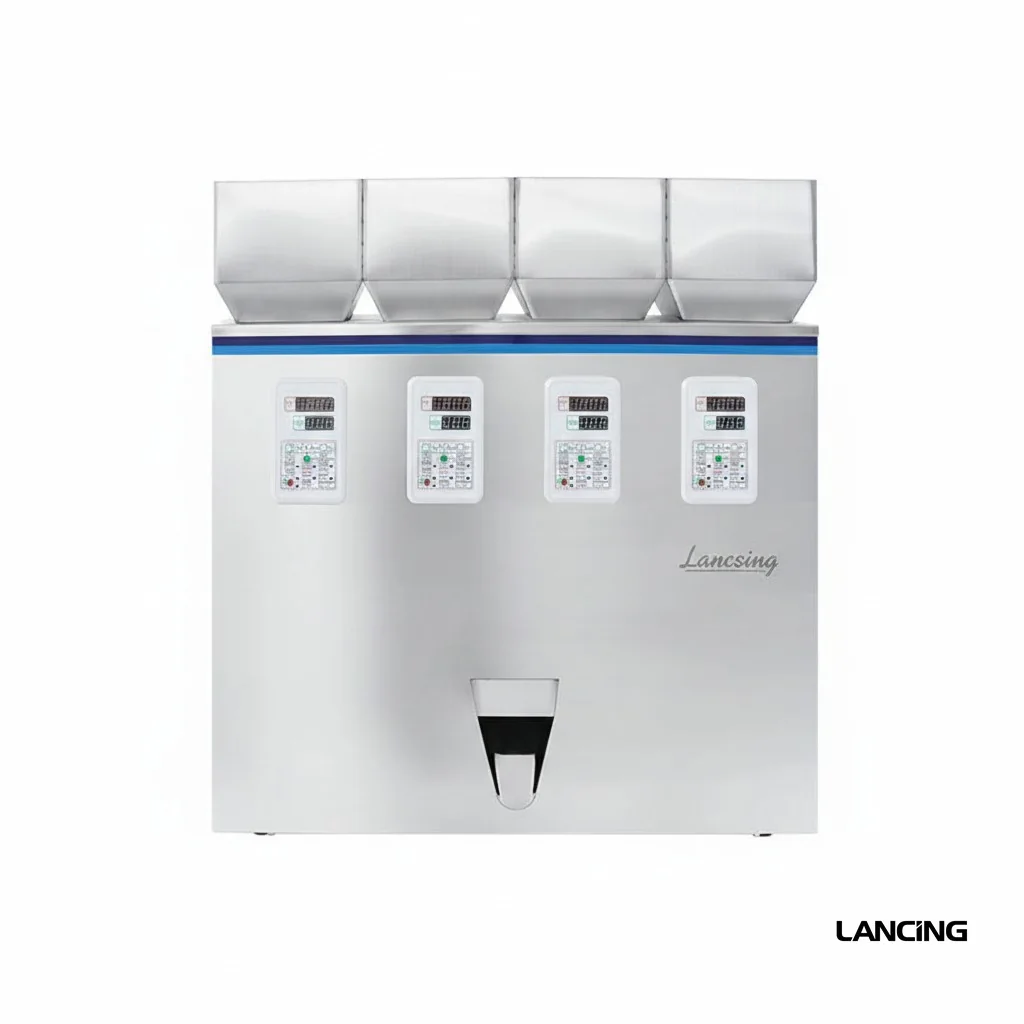
Hopper systems should be specified with the feeder and pack interface, not as isolated components.
Good for moderate outputs, multiple products and controlled dry product dosing.
View routeUseful where speed, accuracy and product combination are central to the project.
View routeOften compared for powders, fine ingredients and products that need screw dosing.
View routeFor automatic bag forming, weighing, filling and sealing from film reels.
View routeThese pages help narrow the specification by product, pack format and machine type.
Short answers for production teams comparing dry-product weighing and filling routes.
Useful details include the product name, bulk density if known, target fill weight, acceptable tolerance, pack format, output per minute or hour and whether the line must connect to feeding, sealing, capping, labelling or checkweighing equipment.
Linear weighers, multihead weighers and auger fillers may all be considered depending on product flow, dose size and output target.
Yes. Many projects involve product feed, weighing, filling, pack handling, sealing or closing and downstream checking. Sending the full pack route helps avoid choosing a filler that later becomes difficult to integrate.
Lancing can advise whether a linear weigher, multihead weigher, auger filler, VFFS line or integrated route is the practical starting point.
The weigh hopper has to receive product, settle the load-cell reading and discharge cleanly into the pack or downstream process.
Hopper level can affect accuracy when product pressure, aeration or starvation changes the feeder behaviour. A stable refill strategy helps the weighing head approach target weight consistently.
Plan level controlDirect discharge can be practical when the product, pack and line timing allow clean capture without a separate holding stage. A weigh hopper may be better when timing, stability or batch release need separation.
Compare discharge routesCheck retained product, dust ledges, reassembly, seals, fasteners, tool-free access and whether the first-off pack after cleaning needs a separate verification step.
Review cleaning checks