Buyer questions answered
Practical questions for specification and approval.
Each answer starts with the decision, then identifies the evidence or limitation that changes it.
Which product properties matter most for difficult weigh filling?
Piece size and variation, shape, surface texture, fragility, stickiness, dust, static, moisture and bulk density all affect whether the feeder can create repeatable increments and whether the dose will discharge completely. The product’s behaviour after transport can matter more than its catalogue description.
Supply representative fines, broken pieces and surface treatments. Photograph the product before and after the trial so the buyer can judge damage and segregation rather than relying only on weight data.
When is linear or vibratory feeding suitable?
Linear or vibratory feeding is a practical candidate when the product can move in controlled increments without excessive breakage or adhesion and the required output is compatible with sequential dosing. Coarse and fine-feed stages can approach the target progressively.
The smallest repeatable increment and product already in motion near the cutoff affect the result. Test feeder amplitude, hopper level and the transition to fine feed using the actual product, not a substitute with different friction or piece size.
When does a multihead weigher help with irregular pieces?
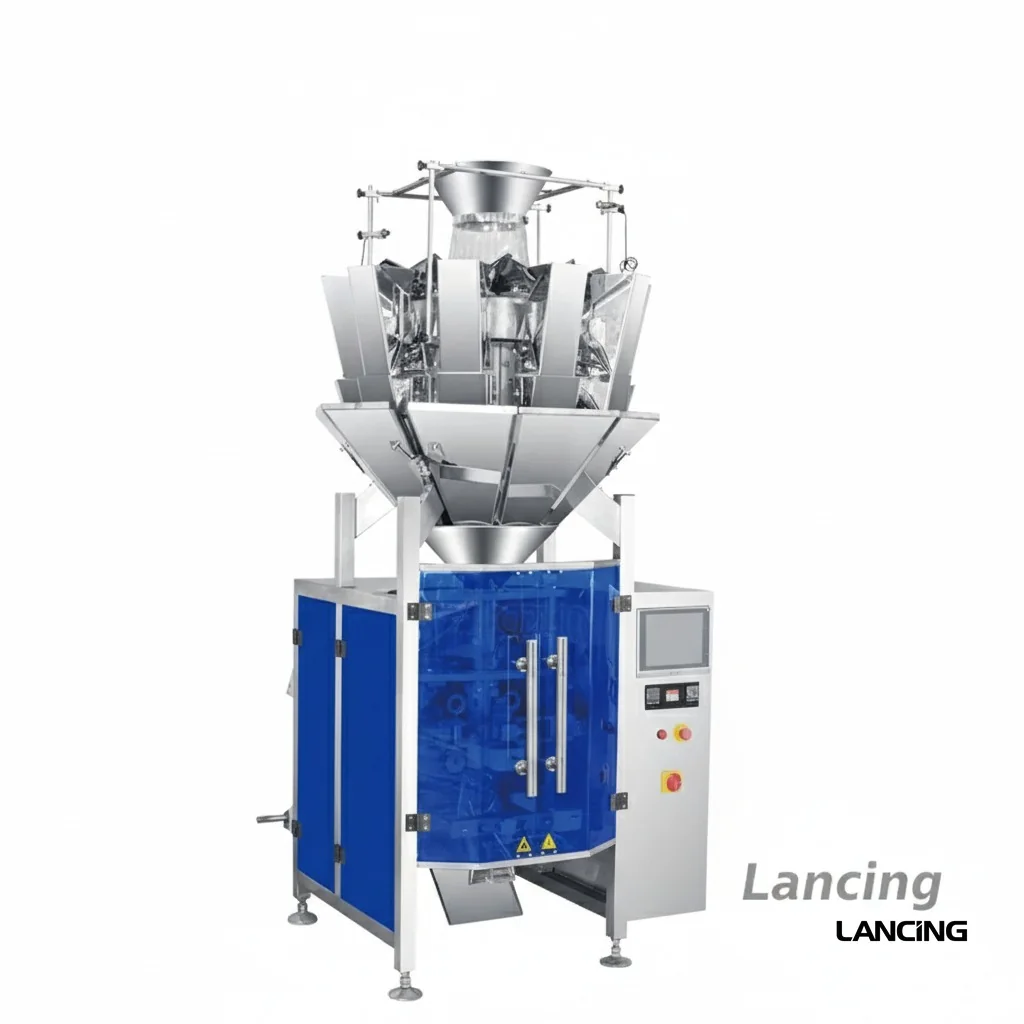
A multihead weigher can help when several separate hopper weights create enough combinations to approach the target efficiently. It is often considered for irregular pieces and higher-output lines, but head count alone does not prove performance. Product distribution, hopper capacity and discharge timing still need trials.
Large pieces or a small target may limit the number of useful combinations. Fragile product may also need controlled radial feed and reduced drop heights. Record piece damage and unavailable combinations during the trial.
How can product damage be reduced?
Reduce unnecessary drop height, sharp changes of direction, high-impact feeder settings and repeated recirculation. Use smooth, appropriately sized contact surfaces and ensure the pack is positioned close enough to receive the dose without bounce or collision.
Damage control can reduce output, so the acceptance test should define both product condition and accepted rate. A route that reaches the target quickly by breaking the product is not a successful solution.
How should sticky or adhesive product be assessed?
Assess whether product coats the feeder, weigh hopper, gates or chute and whether the retained mass changes during the run. A short clean trial may look acceptable before buildup reaches its normal production state. Test the intended run length and cleaning method.
Coatings, surface finishes, agitation or another dosing technology may be considered, but each can change product condition and cleanability. Confirm that any intervention is compatible with the buyer’s product and hygiene requirements.
What should the product trial approve?
The trial should approve weight distribution, product condition, complete discharge, retained product, refill behaviour, accepted output, pack presentation and cleaning access for the intended product and target. It should also define the boundary beyond which another configuration or technology is required.
Keep difficult but representative material in the sample. If the production process creates seasonal or supplier variation, agree how those limits will be verified before the machine is released for routine use.